The Historic Breakthrough
Gold has officially entered uncharted territory. The precious metal crossed $4,000 an ounce for the first time in history, marking a moment that traders, economists, and central bankers will remember for years.
The move sent ripples across global markets. For a commodity that traded below $2,000 just two years ago, this surge signals not just investor anxiety but a major rethinking of where global money feels safe.
Spot gold touched $4,040.41 an ounce early Wednesday, stabilizing at $4,039.48 by midmorning in London. The rally followed weeks of growing unease over Washington’s deepening political deadlock and fears of a looming US government shutdown. Investors who had been waiting for clarity on fiscal policy finally made their choice flock to gold.
The milestone is remarkable not only because of its speed but also its scale. Gold has climbed more than 50% this year, outperforming every major equity index. For many long-time traders, the run feels like the early 1970s all over again, when inflation fears and political tensions drove the metal’s price up fifteenfold.
Behind the rally lies a potent mix of economic worry, political uncertainty, and renewed faith in tangible assets. Markets have spent months trying to make sense of slowing US growth, erratic fiscal negotiations, and signs that the Federal Reserve is edging toward policy shifts. The debate over the Fed’s independence and credibility, fueled by sharp political rhetoric, only deepened the appeal of gold as a safe harbor.
Central banks worldwide have also joined the rush. Their steady accumulation of bullion since 2022 has added fuel to the rally, transforming what began as a defensive trade into a global movement. For everyday investors, gold’s record high feels both astonishing and oddly familiar. Whenever uncertainty dominates the financial landscape, gold finds its way back to the spotlight.
Analysts say the $4,000 mark carries psychological importance. Breaking it reflects not just a technical milestone but a shift in global confidence. Gold has now clearly outperformed stocks, bonds, and even cryptocurrencies this century. And while the metal doesn’t pay dividends or interest, it offers something more valuable right now stability.
As markets opened Wednesday, trading desks from London to Singapore saw volumes spike. Brokers reported renewed interest from both institutional and retail investors, with many seeking to diversify portfolios away from overextended tech equities and the unpredictable US dollar.
Charu Chanana, strategist at Saxo Capital Markets, summed it up neatly. “Gold breaking $4,000 isn’t just about fear it’s about reallocation,” she said. “With economic data on pause and rate cuts on the horizon, real yields are easing, while AI-heavy equities look stretched. Central banks built the base for this rally, but retail and ETFs are now driving the next leg.”
Chanana’s observation captures what traders call the “second wave” of the rally. The first wave came from central banks and institutions seeking refuge from dollar risk. The second, now underway, reflects global investors repositioning for a different kind of economy one that prizes safety, liquidity, and long-term value.
Part 2: The Market Forces Behind the Surge
Every gold rally tells a story. This one begins in Washington and stretches across the financial world.
The immediate trigger was the growing likelihood of a US government shutdown. Budget negotiations between Congress and the White House once again collapsed, reviving memories of previous fiscal standoffs that rattled markets. Investors, wary of political paralysis, shifted from risk assets to havens.
But gold’s rise is about more than one political fight. It reflects a deeper loss of confidence in fiscal management and central bank autonomy.
The Federal Reserve’s recent decision to begin a monetary easing cycle added momentum to the rally. Rate cuts make non-yielding assets like gold more attractive. At the same time, falling bond yields and volatile equities have left investors with few reliable alternatives.
Exchange-traded funds (ETFs) tracking bullion have reported their largest monthly inflows in more than three years. September saw a surge in ETF demand as both retail and institutional investors sought exposure without the hassle of physical storage.
“It’s not just fear it’s strategic repositioning,” said one European metals trader. “People want to hold something real. After years of zero interest rates and inflated stock valuations, gold looks honest.”
The logic is simple: when the economy shakes, gold steadies.
From Hong Kong to Zurich, the shift in market sentiment has been clear. Global funds are rebalancing portfolios, trimming positions in tech-heavy equities, and adding exposure to metals. Many cite stretched valuations in AI and tech sectors as a reason to park money in more traditional stores of value.
Interestingly, the current rally differs from those of the past. It’s not only institutional money leading the charge. Retail investors many of them millennials and Gen Z are playing a growing role. The democratization of investing through mobile apps and online brokerages has made it easier than ever to buy gold-backed assets.
“Gold feels real, and right now people want real,” said a London-based ETF manager. “It’s not about chasing hype. It’s about peace of mind.”
Underlying all this activity is the perception that US monetary and fiscal policy are drifting out of sync. The Fed’s actions, while aimed at stabilizing growth, are now tangled with political noise. And that worries investors who remember the inflation scars of the 1970s.
The Fed’s Dilemma and Political Interference
The Federal Reserve is facing one of its toughest tests in decades.
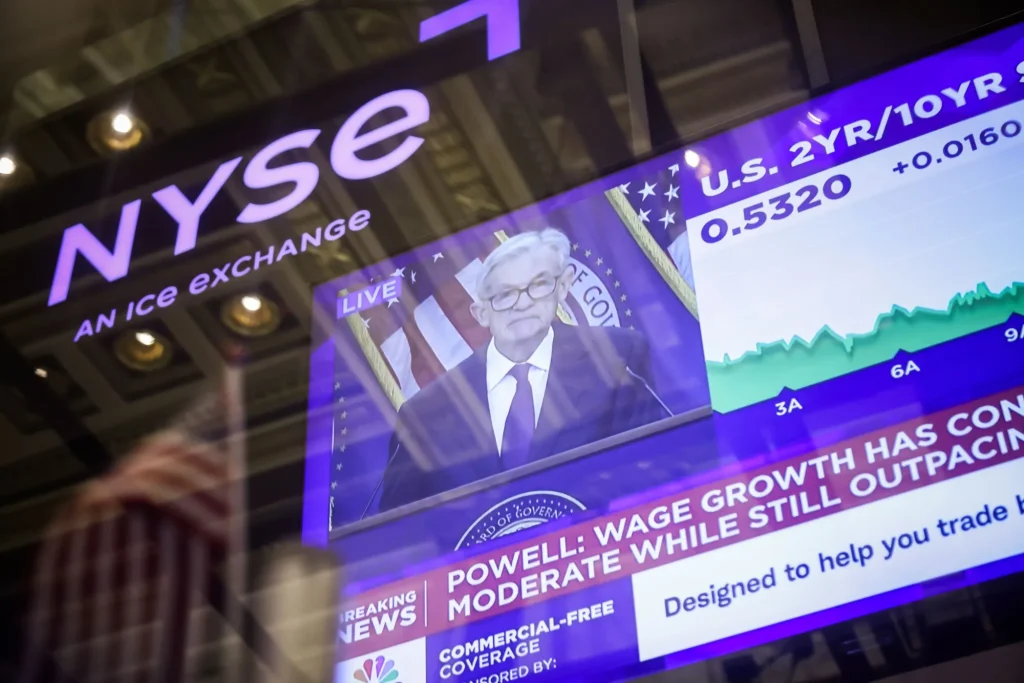
For much of the past year, questions about its independence have overshadowed policy debates. President Donald Trump’s frequent attacks on the Fed, including threats to remove Governor Lisa Cook and public criticism of Chair Jerome Powell, have raised alarms among economists.
Gold’s rise has mirrored those concerns. Each time political pressure on the Fed intensifies, bullion gains. It’s a direct reflection of market skepticism toward Washington’s ability to maintain fiscal and monetary discipline.
The dynamic is eerily similar to the 1970s, when then-President Richard Nixon pressured Fed Chair Arthur Burns to cut rates. The result was a decade of runaway inflation and a dramatic gold rally after the US abandoned the gold standard.
Macquarie Bank analysts recently noted that “a compromised Fed making policy errors would be a bullish setup for gold.” Their September 30 report predicted that gold would reach its cyclical peak when doubts about the Fed’s independence were at their highest.
The comparison to Nixon’s era is not just academic. The Fed’s credibility is central to global financial stability. When that credibility falters, the consequences ripple through currencies, bonds, and commodities.
Gold thrives in such uncertainty.
The historical echoes are hard to ignore. In the 1970s, a politically influenced Fed fueled inflation by keeping rates too low. Today, markets fear the opposite problem a central bank cornered by political threats, unable to act decisively.
Gold, as it did half a century ago, is once again serving as the scoreboard of trust.
Even billionaire Ray Dalio, founder of Bridgewater Associates, acknowledged the parallel this week. “Gold is certainly more of a safe haven than the dollar,” he said at the Greenwich Economic Forum. “If you look at asset allocation from a strategic standpoint, gold deserves at least 15% of the portfolio.”
Dalio’s words carry weight. His fund has long studied macroeconomic cycles and currency behavior. When he says the gold rally echoes the 1970s, markets listen.
Ken Griffin of Citadel voiced a different view, suggesting that gold’s surge reflects deep anxiety about the US currency rather than optimism about the metal itself. Still, both men agree on one thing: gold has reclaimed its role as the ultimate hedge against political and financial mismanagement.
Central Banks and the Structural Shift in Gold Buying
The central banks’ influence on gold’s ascent cannot be overstated.
Since the 2008 financial crisis, they have quietly transitioned from net sellers to net buyers. The shift accelerated after 2022, when the United States and its allies froze Russia’s foreign exchange reserves in response to the invasion of Ukraine.
That move was a turning point. Many nations, especially in Asia and the Middle East, began rethinking their dependence on the US dollar. The idea that reserves could be politicized forced central banks to diversify. Gold, with no counterparty risk, emerged as the obvious alternative.
According to the World Gold Council, central bank purchases hit record highs in 2023 and remained elevated through 2024. China, India, and Turkey led the buying spree, while smaller economies followed suit.
Lina Thomas, a commodities strategist at Goldman Sachs, described this as a “structural shift in reserve management.” In her September note, she wrote, “We do not expect a near-term reversal. Our base case assumes the current trend in official sector accumulation continues for another three years.”
Goldman Sachs recently raised its forecast for December 2026 to $4,900 an ounce, up from $4,300.
The strategic reasoning is clear. Central banks want insulation from currency volatility and geopolitical shocks. With the dollar facing renewed scrutiny and fiscal uncertainty in Washington, gold’s appeal as a neutral store of value has grown stronger.
The move toward gold also reflects a broader transformation in global finance. Emerging economies are asserting more control over their reserves, and the dollar’s dominance, while still strong, is no longer absolute.
As Thomas noted, “Gold’s allure lies not in yield but in sovereignty.”
What’s Next for Gold and the Global Economy
So where does gold go from here?
With the metal holding above $4,000, analysts are debating whether this is the beginning of a new era or the top of a historic rally.
Some expect consolidation. Others, like Goldman Sachs and Bridgewater Associates, see more upside as long as monetary and political uncertainty persist.
Investors are watching two factors closely: the Fed’s next moves and Washington’s ability to avoid a prolonged shutdown. If either wobbles, gold could surge again.
Yet even if prices stabilize, the metal has already reshaped global portfolios.
From hedge funds to pension managers, gold is once again a central component of risk strategy. ETF volumes are at multi-year highs, and physical demand remains strong across Asia.
The return to gold marks a quiet but significant shift in investor psychology. After years of chasing returns in speculative markets, the pendulum is swinging back toward security and preservation.
The irony is that gold’s strength often signals weakness elsewhere. Its rise reflects a world uneasy about politics, debt, and central banking. But it also speaks to resilience the human instinct to seek stability amid uncertainty.
If history is any guide, this rally still has room to run.
Gold has weathered recessions, wars, and currency crises. Each time, it emerges as both witness and refuge.
For now, the numbers speak for themselves. Bullion has gained more than 50% this year, delivering its best performance since the 1970s. It has outpaced the S&P 500, outlasted the dollar, and outshone Bitcoin.
The $4,000 milestone is more than a headline. It’s a message to investors, to policymakers, and to anyone paying attention.
Trust, once broken, is costly to rebuild. And in times like these, gold remains the world’s oldest and most reliable currency of confidence.